
What parents should know about potty training
Potty training is one of those parenting milestones that looks simple from the outside, but in real life, it’s anything but predictable.
Some children learn early, others much later. Both are completely normal. There is no “right age” that fits every child.
Some children become daytime dry around age three, others closer to four or even later. And even after that, small accidents are still part of the process.
A child cannot fully control their bladder and bowels until their nervous system is mature enough. This is not something they can rush.
The most important mindset: no pressure
One of the most helpful things a parent can do is simply… not rush it.
Children learn best when they are relaxed, not pressured or forced.
If potty training starts to feel stressful or negative, it’s okay to pause and try again later.
This is not a race.
Helping your child understand their body
You can gently help your child become aware of what is happening in their diaper.
When changing a diaper, you can simply describe what you see in a calm, neutral way:
- “Oh, your diaper is very full of pee.”
- “There’s poop in your diaper.”
Some children are curious and may want to look. That’s okay. You can briefly show it, talk about it, and then move on naturally.
The key is: no disgust, no shame. Just neutral learning.
Introducing the potty gently
Let the potty be part of everyday life, not something forced.
- Put it in the living room
- Let your child sit on it with clothes on at first
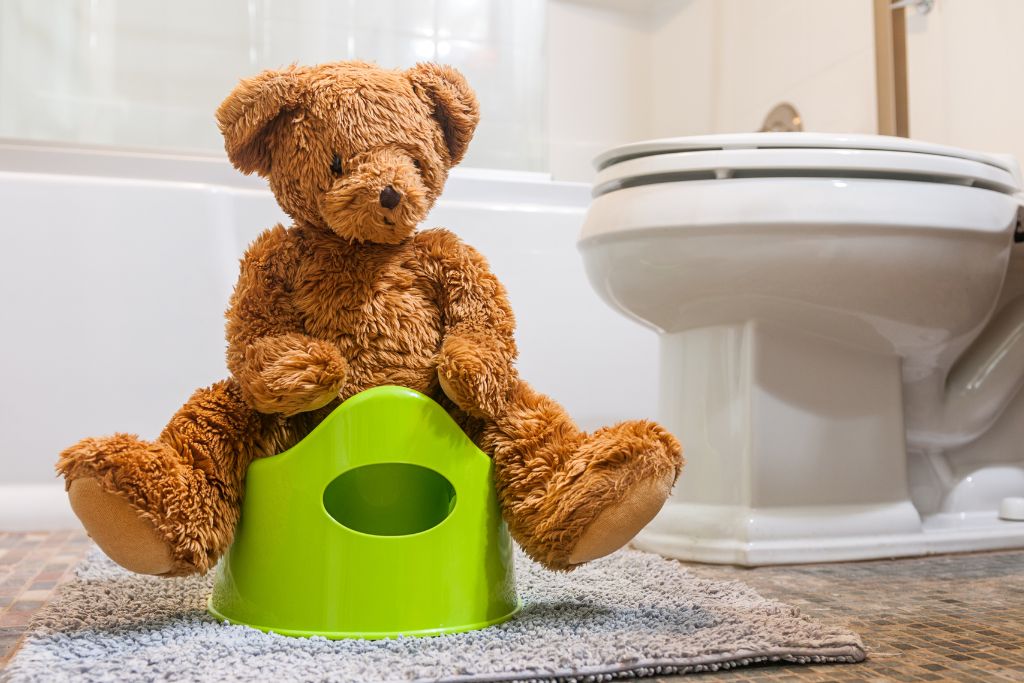
- Let a doll or teddy try it
- Keep it playful and relaxed
- Read books or blow bubbles while sitting
For some children, sitting on a potty without a diaper can feel strange or even a bit scary at first. That’s normal.
Make it part of daily routine, not pressure
If you start training, offer the potty at natural times during the day, for example:
- after waking up
- after meals
- before bath time
If nothing happens, it’s okay. Praise the effort and make the experience positive either way.
If something does happen, celebrate:
“That went in the potty! Great job.”
If nothing happens:
“That’s okay, good job for sitting on it.”
Timing matters
Avoid starting potty training during big life changes, such as:
- a new sibling
- moving house
- starting daycare
- illness or stress
Children need stability for this skill to develop smoothly.
Letting your child observe you
Children learn a lot by watching. Let them come with you to the bathroom if they are curious. Explain simply what you are doing.
For many children, this makes the whole process more familiar and less intimidating.
Going without diapers (when ready)
Some parents choose to remove daytime diapers once the child seems ready, keeping them only for naps or nighttime. Others do a gradual approach, increasing diaper-free time slowly. Both are fine.
Either way, accidents will happen, especially at the beginning.
It helps to:
- have spare clothes with you
- be prepared for messes at home
- avoid stress when accidents happen
Accidents are part of learning. Even when a child is mostly dry, accidents can still happen. This is not failure. It is development.
If a child forgets to go, gets distracted or waits too long, it is simply part of learning to listen to their body.
Nighttime dryness takes longer
Daytime dryness and nighttime dryness are two different things.
Nighttime control usually develops later and it is completely normal for children to need a diaper at night even after being dry during the day.
Signs a child might be ready to try without a night diaper:
- the diaper is often dry in the morning
- the child is interested in trying
- they wake up needing to pee
Even then, accidents are still very normal.
Protect the bed, keep it low pressure and treat accidents calmly:
“It’s okay, accidents happen. It doesn’t matter.”
Never get angry. Children do not wet the bed on purpose.
Wiping and independence
Children also need time to learn wiping and hygiene skills:
- wiping after pee usually around 3–4 years
- wiping after poop around 5–6 years
Hand washing after toilet use should be taught early on.
A small reminder for parents
Potty training is not about control or perfect timing.
It’s about readiness, patience and trust in your child’s development.
There will be accidents and setbacks. There will be days when nothing works.
And that is completely normal.
You are not doing it wrong.
You are simply guiding your child through a skill that takes time.
See our potty training printables;
Want personalised guidance?
Book a consultation and get guidance designed for your family.
Book a consulting session →


